THE U.S. “WHITE” DOMINANT CULTURE AT THE CROSSROADS OF DIVINE ACCOUNTABILITY

I. INTRODUCTION: WHY JEREMIAH NOW
The book of Jeremiah is not comfortable reading. It is not designed to be. It is the record of a man commissioned by YHWH to stand at the gate of a powerful, self-assured nation and speak the most unwelcome words a prophet can speak: your confidence is misplaced, your sins are structural, your end is approaching, and the time for easy repentance is running short. Jeremiah was not an outsider lamenting a foreign civilization. He was a priest of Anathoth, a member of the covenant community, weeping over the ruin of his own people.
That is precisely why Jeremiah speaks with such force into the present moment of the United States of America.
This essay does not argue that the U.S. is the covenant nation of Israel — that would be the theological error known as “Christian” nationalism in its most dangerous form. What it argues is this: the U.S. has been, for generations, a nation saturated with the gospel announcement, populated by tens of millions who name the name of Jesus Christ, shaped by “churches,” “Christian” universities, “missionary” societies, and “faith-based” institutions. That gospel saturation creates a form of moral and spiritual accountability before YHWH that resembles — without being identical to — the accountability of the covenant nation in Jeremiah’s day. Where the gospel has gone, so has the standard. The ethnē are not Israel. But they are not thereby exempt from the judgment of the King of all nations.
With that clarification established, the message of Jeremiah lands on the present U.S. moment with a weight that demands engagement.
One more theological clarification is necessary before proceeding. Under the original Edenic covenant in Adam, all humanity — Jews and Gentiles alike, U.S. inhabitants included — rebelled against YHWH and came under His just covenant wrath. That is the universal ground of accountability, prior to and independent of any gospel exposure. Under the pedagogical Mosaic covenant, Israel likewise rebelled against YHWH, came under His just covenant wrath, and was exiled by Him. Jesus Christ of Nazareth is the eschatological Adam who perfectly obeyed YHWH’s original Edenic covenant commands in the place of His believers–followers, and the eschatological Israel who perfectly obeyed the pedagogical Mosaic covenant commands also in the place of His believers–followers, thereby inaugurating the new covenant through His life, death, resurrection, and ascension.
As the crucified, risen, and ascended Messiah, all authority in Heaven and the whole universe has therefore been given to Him. All nations — Jewish and Gentile alike, including the U.S. — already stand under His inaugurated Kingdom and just judgment. Jeremiah and the rest of the Old Testament apply pedagogically and civilly to all nations and peoples under Christ’s reign, including the U.S., but not covenantally, while the New Testament directly governs the life and mission of Christ’s new–covenant believers–followers. All of Scripture applies to professing Christians worldwide, throughout history, and until the consummation. That is the hermeneutical ground on which everything that follows stands.
This is why the risen Christ sends His witnesses to disciple all the ethnē under His universal authority (Matt. 28:18–20), and why God’s new-covenant word announces that He now commands all people everywhere to repent, having fixed a day on which He will judge the world with justice through the risen One whom He has appointed (Acts 17:30–31).
—–
II. THE BOOK OF JEREMIAH: AN EXPOSITORY OVERVIEW
Jeremiah provides not the ground of that accountability — Christ’s universal reign establishes that — but the pastoral and rhetorical resources that make it existentially urgent: lament, the cost of witness, the temptation to false comfort, and the shape of faithful exilic life.
A. Historical Context
Jeremiah ministered from approximately 627 BCE to after 586 BCE — a span covering the final decades of the Kingdom of Judah, from the reign of Josiah through the destruction of Jerusalem and the Babylonian exile. He witnessed Josiah’s reform, its failure to penetrate beneath the surface of the people’s soul, the deaths of Josiah and the subsequent puppet kings, the rise of Babylon as the dominant superpower, the false prophets who promised peace, and finally the catastrophic fall of the city, the burning of the Temple, and the deportation of the survivors.
Jeremiah did not predict this catastrophe from a distance. He lived through it. He was thrown into a cistern for his words (Jer. 38:6). He was banned from the Temple (Jer. 36:5). He watched his own written scroll burned by the king (Jer. 36:23). He wept with an intensity so sustained and so honest that he has been called “the weeping prophet” for three millennia. And through all of it, he continued to speak.
B. The Structure of the Book
The book of Jeremiah resists clean linear organization — it is a collection of oracles, biographical narratives, lament psalms, prose sermons, and prophetic sign-acts assembled in a largely non-chronological order. Nevertheless, several major movements can be identified:
Chapters 1–10: The Call and the Early Oracles. YHWH commissioned Jeremiah with unsettling directness: “Before I formed you in the womb I knew you, and before you were born I consecrated you; I appointed you a prophet to the nations” (Jer. 1:5). The opening oracles catalog the nation’s fundamental betrayal: they have forsaken YHWH, the fountain of living waters, and dug for themselves broken cisterns that can hold no water (Jer. 2:13). This is the central metaphor of the entire book. Judah has abandoned the source of life and substituted systems of her own construction — religious, political, economic — that cannot sustain her.
Chapters 11–20: The Covenant Lawsuit and the Laments. YHWH was prosecuting a rib — a formal legal complaint — against the nation for violation of the Mosaic covenant. These chapters also contain Jeremiah’s confessions, raw and anguished: he cursed the day of his birth (Jer. 20:14–18), accused YHWH of deceiving him (Jer. 20:7), and yet could not stop speaking because the word was like fire shut up in his bones (Jer. 20:9). The prophet who called the nation to repentance was himself in agony. This is the cost of prophetic witness.
Chapters 21–29: Oracles Against the Kings and False Prophets. YHWH pronounced judgment on the Davidic kings who had failed their shepherd calling: “Woe to the shepherds who destroy and scatter the sheep of my pasture” (Jer. 23:1). The false prophets who were declaring peace where there was no peace received some of the sharpest condemnation in all of Scripture: they were stealing words from one another, were speaking visions from their own hearts, were strengthening the hands of evildoers, and were telling every one who walked in the stubbornness of their heart that no disaster will come upon them (Jer. 23:25–32).
Chapters 30–33: The Book of Consolation. In the midst of judgment, YHWH interrupted the sequence with startling promises of restoration. A new covenant will be made — not like the covenant broken at Sinai — written not on stone but on the heart (Jer. 31:31–34). YHWH will restore the fortunes of His people. Jeremiah, while the city was under siege and he himself was imprisoned, bought a field in Anathoth as a sign that “houses and fields and vineyards will again be bought in this land” (Jer. 32:15). The prophet who was speaking catastrophe also enacted hope.
Chapters 34–45: The Passion Narrative of the Prophet. These chapters trace the final siege, the fall, the burning, the flight to Egypt against YHWH’s word, and the fate of Jeremiah himself — last seen in Egypt, was still prophesying to a people who would not hear. The biography of a man who gave everything and, by worldly measure, accomplished nothing.
Chapters 46–51: Oracles Against the Nations. YHWH is not merely the God of Judah. He is the King of all nations. Egypt, Philistia, Moab, Ammon, Edom, Damascus, and Babylon all receive their accounting. Babylon, the instrument of judgment on Judah, will itself be judged (Jer. 50–51). No imperial power is beyond the reach of the divine court.
Chapter 52: The Historical Appendix. The fall of Jerusalem, told with sparse, devastating brevity.
C. The Core Theological Themes
1. YHWH as the Sovereign King of History. Jeremiah’s theology is thoroughly theocentric. The rise of Babylon is not a defeat of YHWH; it is an instrument of YHWH. Astonishingly, He called Nebuchadnezzar “My servant” (Jer. 25:9). Imperial power, however brutal, serves the purposes of the King of all nations. This does not excuse Babylon’s atrocities — she will be held accountable for them — but it locates all historical events within a sovereign governance that transcends any single nation’s self-understanding.
2. The Deceitfulness of False Comfort. The false prophets of Jeremiah’s day spoke the language of peace, blessing, and divine favor to a nation accelerating toward ruin. “They have healed the wound of my people lightly, saying ‘Peace, peace,’ when there is no peace” (Jer. 6:14; 8:11). This is not a peripheral concern in Jeremiah — it is structural. The most dangerous spiritual condition is not atheism or non-Christian religionism, but religious self-deception: the conviction that because one is affiliated with the covenant people, one is insulated from covenant consequences.
3. The Internalization of Covenant Faithfulness. YHWH’s diagnosis of Judah’s failure is not merely behavioral but cardiac: “The heart is deceitful above all things, and desperately sick; who can understand it?” (Jer. 17:9). The Josianic reform demonstrated that acts of external religious reformation — smashing altars, reinstituting Passover, rediscovering the Torah — good as they are, could not produce the interior transformation that covenant faithfulness requires. Only YHWH Himself, through the new covenant in Christ’s blood, can write the Torah on the heart. This promise, cited in Hebrews 8 and 10, establishes the continuity between Jeremiah’s hope and the eschatological covenant.
4. Costly Prophetic Witness. Jeremiah’s life embodied what a genuine prophetic ministry costs. He was not rewarded for faithfulness in any worldly sense. He was isolated, imprisoned, mocked, threatened, and silenced — repeatedly. The temptation to soften the message, to align with power, to find some middle ground between the word of YHWH and the preferences of the political establishment, is present on every page of the book. Jeremiah resisted it, at enormous personal cost. This was not incidental to his calling — it was constitutive of it.
5. Judgment as a Form of Mercy. One of the most disorienting dimensions of Jeremiah is YHWH’s insistence that Babylon was, in a specific redemptive-historical sense, the merciful option. The people who surrender and submit to exile will live; those who resist will perish by sword, famine, and pestilence (Jer. 21:8–9). This is not a comfortable theology. But it is a coherent one: divine discipline, however severe, is not divine abandonment. The exile is not the end of the story. The Book of Consolation exists because YHWH’s covenant faithfulness outlasts human covenant rebellion and infidelity.
—–
III. THE U.S. DOMINANT “WHITE” CULTURE AT THE CROSSROADS
The movement from Jeremiah’s world to our own requires moral translation. The prophetic categories of mishpat and tsedaqah do not name modern policies directly — they name realities: oppression, injustice, falsehood, the betrayal of the marginalized. What follows is an act of discernment: an attempt to identify where those realities are visibly present in the current U.S. moment.
A. Gospel Saturation and Intensified Accountability
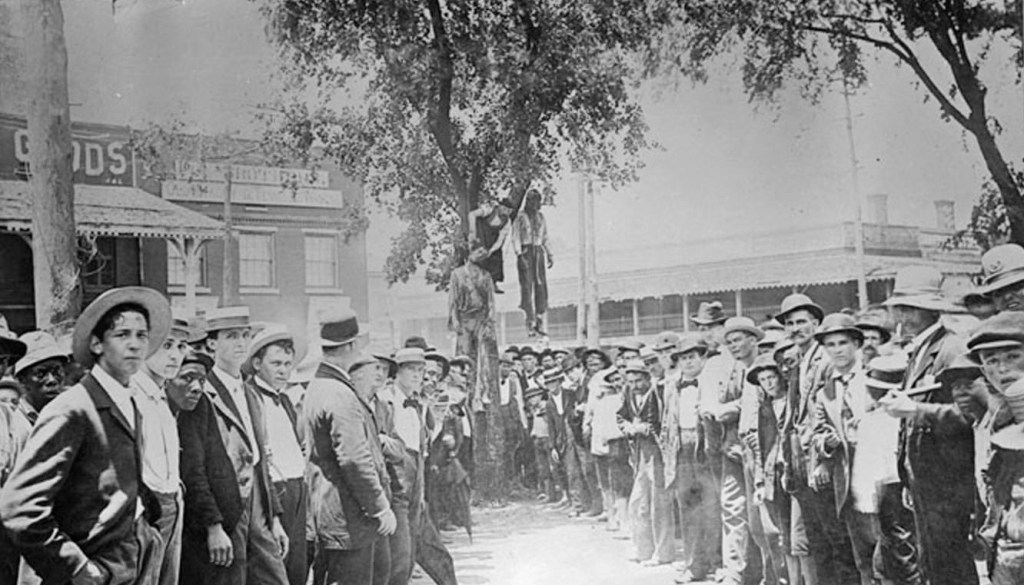
The U.S. is not the covenant nation. But it is, historically and sociologically, a nation in which the gospel announcement has been present at enormous scale and with enormous institutional resources for over four centuries. The Puritans who landed in New England brought an explicitly covenantal theology, complete with the conviction that they were a city on a hill with obligations to Christ and the watching world. However distorted by settler colonialism, the enslavement of Foundational Black Americans, the genocide and dispossession of Native peoples, and the imperialist syncretism of nationalism and Christianity, that “theological” heritage has never fully departed from the U.S. dominant culture’s public imagination.
Today, according to extensive survey data, the majority of U.S. citizens still identify as “Christian.” “Evangelical Christianity” remains one of the most organizationally powerful religious movements in the nation. Thousands of “churches,” seminaries, and parachurch organizations proclaim the name of Christ each week. The Bible is the most purchased, most distributed, and most cited book in the country.
This saturation does not make the U.S. a Christian nation in any covenantal sense. But it does mean that the universal accountability all nations already bear under the reign and judgment of the crucified, risen, and ascended Messiah is intensified here. As Jeremiah’s contemporaries discovered, those who have heard, known, and held the word bear a heavier accounting for it — and that intensified accountability falls with particular force on “Christians” in the country, and through their public witness, on the nation they inhabit.
B. Broken Cisterns: Idolatry in Contemporary Form
Jeremiah’s image of broken cisterns maps with surgical precision onto the current U.S. moment. The nation — and, critically, significant and influential sectors of “Christianity” in the country — has forsaken the fountain of living waters and constructed elaborate alternative systems for security, meaning, and flourishing.
Economic supremacy has become a functional theology: the conviction that GDP growth, stock market performance, and national wealth constitute the evidence of “divine blessing” and the guarantee of national security. This is the ancient idol of Mammon wearing a flag.
National exceptionalism has become a substitute eschatology: the belief that the U.S. occupies a unique and permanent position of “divine favor” that exempts it from the moral logic that governs other nations. This is the precise error Jeremiah’s contemporaries made about Jerusalem and the Temple. YHWH’s response to it has not changed: “Do not trust in these deceptive words: ‘This is the temple of YHWH, the temple of YHWH, the temple of YHWH’” (Jer. 7:4). The U.S. version runs: “This is the exceptional nation, the exceptional nation, the exceptional nation.”
Socio-political domination has become, for too many “Christians” in the U.S., the primary instrument of the kingdom of God. The alignment of significant portions of “evangelical Christianity” with white “Christian” nationalist politics — the conviction that dominion over the nation’s political institutions is the mission of the “church” — represents a form of the broken cistern error at its most catastrophic. It trades the gospel of Christ, the crucified, risen, and already reigning Savior–Healer for the counterfeit hope, vision, promise, and announcement of a tyrannical, authoritarian socio-political movement.
C. False Prophets: Peace, Peace
Christians in the U.S. have no shortage of voices that say, in effect, “Peace, peace.”
There are the prosperity “gospel” voices who declare that YHWH’s will is material abundance, that faithfulness guarantees health and wealth, and that suffering is evidence of insufficient faith. This is Jeremiah 6:14 translated into English and amplified through modern media.
There are the “Christian” nationalist voices who have declared the current political moment a “divine” restoration, who have attached the name of Christ to policies of exclusion, wealth concentration, the targeting of immigrants, the eradication of democratic accountability, the unrelenting oppression of Black, Native, and other marginalized communities, and the terrorizing of those who witness truthfully. These voices are not peripheral to U.S. “Christianity”; at this moment, they exercise significant influence over the largest “evangelical” denominations and media platforms in the nation.
There are the quietist voices who, in the name of being apolitical, have rendered their “Christian” witness toothless in the face of structural injustice and tyranny — who have distorted and over-spiritualized the gospel, manipulating it to say nothing about the marginalized, the Native American, the Foundational Black American whose community is being systematically harmed and erased, the immigrant whose family is being torn apart. This too is a form of false prophecy: the false prophecy of comfortable silence that masks complicity. It murders and plunders.
Jeremiah’s word to all of these: you are strengthening the hands of evildoers, so that no one turns from his evil; they have become to Me like Sodom, and its inhabitants like Gomorrah (Jer. 23:14).
D. The Shepherds Who Scatter
Jeremiah 23 is among the most scalding passages directed at leaders in all of Scripture. The shepherds — the kings, the priests, the prophets — have not just failed their people; they have actively scattered them. They have not sought the lost. They have not healed the injured. They have ruled with force and harshness.
In the U.S. context, leadership failures along these lines are not abstract. They are documented, measurable, and current. Political leaders who have used the language of “Christian” faith to authorize cruelty toward the most marginalized — the poor, the incarcerated, the immigrant, the sick without healthcare, the child without adequate nutrition — while concentrating wealth and power at the top of the social structure are performing, in contemporary register, exactly the sin that Jeremiah indicted in the shepherds of Judah.
The “church” leaders who have blessed this political program, who have stood in “ministerial” robes and spoken peace over it, who have given “theological” cover to what Scripture calls injustice — they occupy the position of the false prophets of Jeremiah 23. YHWH’s word to them has not softened: “I did not send the prophets, yet they ran; I did not speak to them, yet they prophesied” (Jer. 23:21).
E. The “White” Structural Sins That Require Naming
No political faction is exempt from YHWH’s demand for truth, justice, and mercy; but this essay addresses the dominant force within U.S. “Christianity” that is presently wielding the name of Christ to justify exclusion, tyranny, and the concentration of power.
Jeremiah did not speak in generalities. He named the specific sins of his people: the shedding of innocent blood (Jer. 7:6), the oppression of the immigrant, the fatherless, and the widow (Jer. 7:6), the worship of foreign gods, the theft, murder, adultery, and false swearing of a people who then walked into the Temple and declared themselves safe (Jer. 7:9–10). YHWH called this making the Temple a den of robbers. Christ, cleansing the Temple in Jerusalem, cited this passage from Jeremiah by name (Mk. 11:17).
The U.S. — with its “Christian” citizens — faces structural sins that require the same specificity:
The legacy and ongoing effects of the chattel enslavement of Foundational Black Americans — a system built by labor stolen over centuries, a barbarism never honestly confronted, a debt never acknowledged, a dispossession whose consequences shape wealth, health, education, and incarceration outcomes to this day.
The ongoing dispossession and erasure of Native Americans and their communities, lands, and sovereignty — a process that continues in legal and political form and that has never received the prophetic denunciation from the majority of “Christians” that it requires.
The weaponization of immigration enforcement as a form of political terror against Latine and other communities — families separated, communities destabilized, human beings treated as instruments of political theater. YHWH’s standard is unambiguous: do not oppress the immigrant, for you were immigrants in the land of Egypt (Jer. 7:6; Ex. 22:21). When enforcement practices function in ways that systematically separate families, destabilize communities, and deploy fear of the immigrant as an instrument of political mobilization, they bear the marks of the oppression the prophets condemned — regardless of how they are branded or justified.
The concentration of obscene wealth in the hands of a tiny fraction of the population while millions lack healthcare, adequate housing, and sufficient food — a justice–righteousness deficit that the Hebrew prophets from Amos to Micah to Jeremiah identified as covenant-breaking rebellion.
The normalization of political deception and dishonesty at a scale and boldness that would have horrified earlier generations — the systematic dismantling of truthful public discourse in service of factional, authoritarian, tyrannical power.
These are not political opinions imported into Scripture. They are the application of the prophetic standard of mishpat and tsedaqah — justice and righteousness — to the current moment, in the tradition of every authentic servant–messenger YHWH sent to His people.
—–
IV. THE WORD YHWH SPOKE TO JEREMIAH’S CONTEMPORARIES — AND SPEAKS NOW
A. Lament Is Not Despair
Jeremiah’s confessions are not weakness. They are the honest cry of a person who has fully inhabited the grief of YHWH over the ruin of the people He loves. “Is there no balm in Gilead? Is there no physician there? Why then has the health of the daughter of My people not been restored?” (Jer. 8:22). This is not resignation. It is prophetic solidarity with the suffering of the broken.
“Christians” in the U.S. need this posture. Not triumphalism. Not despair. Lament — the honest, named, specific acknowledgment of evils committed and left unrepented, and of what they have cost the most marginalized — is the entry point into genuine repentance. YHWH does not respond to a lament that has not been uttered.
B. The Call to Return Remains Open
Throughout the book of Jeremiah, even as the word of judgment intensifies, YHWH’s call to return (shuv — turn, repent, come back) persists. “Return, faithless Israel, declares YHWH. I will not look on you in anger, for I am merciful, declares YHWH” (Jer. 3:12). The prophetic word is not merely accusation; it is invitation. The invitation is real. The window, however, is not indefinite.
Both the “Christian” and non-Christian people of the U.S. are called to that shuv now. Specifically: repentance from the idolatries named above, from the false prophetic voices that have been amplified and funded and platformed, from the complicit silences in the face of multiple structural injustices and oppressions, from the substitution of socio-political domination for the Great Commission, and from the myriad harms and atrocities that the dominant “White” culture continues to inflict upon Black, Native, and other oppressed individuals and communities.
Jeremiah himself modeled what this returning looks like in practice. Writing to the exiles already in Babylon — a pagan empire they did not choose and could not control — he delivered YHWH’s word with stunning specificity: build houses, plant gardens, marry, raise children, and seek the peace–wellbeing of the city where you have been sent, praying to YHWH on its behalf, for in its peace–wellbeing you will find your own (Jer. 29:4–7). This is not quietism. It is not accommodation. It is the posture of a people who know they are not home, who refuse both the fantasy of dominion and the paralysis of despair, and who invest in the common good of the place where YHWH has placed them — not because the empire deserves it, but because the true, cosmic Emperor commands it. For “Christians” in the U.S., shuv looks like this: not seizing the nation’s political institutions “for Christ,” and not retreating from the nation’s wounds into privatized piety, but building, planting, praying, and working for the peace–wellbeing of a nation that, in its entirety, belongs — whether it acknowledges it or not — to the King of all nations.
C. The New Covenant Promise Holds
The Book of Consolation in Jeremiah 30–33 establishes that YHWH’s redemptive purposes are not defeated by human covenant-breaking. The new covenant promised in Jeremiah 31:31–34 has been inaugurated in Christ. The Holy Spirit, given as arrabōn — down payment, guarantee — of the coming fullness, is the agent of the internal transformation Jeremiah longed for. The Torah written on the heart is not a metaphor; it is the actual work of the Spirit in the lives of those who belong to God in Christ.
This means the prophetic rebuke of the U.S. dominant culture, however sobering, is not the final word. The final word is the freeing, healing, renewing gospel of the One who makes all things new. The sincere Christians’ mission in this moment is not to dominate the nation through worldly, tyrannical power — that is the category error of “Christian” nationalism. The mission is to be, within the nation, a community of the new covenant: merciful, loving, caring, hospitable, truthful, just, cruciform, Spirit-filled, unintimidated by power, and persevering in both special-grace ministry and common-grace calling.
D. The Cost of Faithful Witness
Jeremiah did not win. He bought a field, preached through a siege, survived a cistern, and ended his days in Egypt among a refugee community that still would not hear. By every conventional measure, his ministry failed. YHWH did not promise him success. YHWH promised him presence: “I am with you to deliver you” (Jer. 1:8).
That is the promise available to those who carry the Christian holistic–missional calling in the current U.S. moment. It will cost something. It has already cost something — relationships, jobs, platforms, institutional positions — for those who have spoken truthfully against tyrannical power, against the structural sins, against the false prophets with their megaphones and their political connections. The cost is real. But the promise is also real.
—–
V. CONCLUSION: STANDING AT THE GATE
Jeremiah stood at the gate of the Temple and spoke. He did not whisper. He did not negotiate with the political sensibilities of his audience. He named what YHWH named, wept what YHWH wept, and held open what YHWH held open — the possibility of return, the certainty of the new covenant, the unbreakable faithfulness of the King of all nations.
The U.S. is not Judah. But the gospel of Emperor–Healer Jesus Christ has gone to the ends of the earth from this continent, carried by “missionaries,” translators, aid workers, and “teachers” in extraordinary numbers. That sending intensifies an accountability already borne by all nations under the reign and judgment of the crucified, risen, and ascended Messiah. “Christians” in the U.S. have been entrusted with much. The standard of justice–righteousness, of covenant faithfulness, of truthful, gospel-centered witness in the face of tyrannical power — these are not optional add-ons to the Savior’s good announcement. They are constitutive of it.
YHWH is not mocked. The idols of national exceptionalism, economic supremacy, and socio-political domination will not hold. The broken cisterns will hold no water. The question before “Christians” in the U.S. in this hour is the same question Jeremiah set before Jerusalem: See, I am setting before you the way of life and the way of death (Jer. 21:8).
The way of life requires turning. It requires naming. It requires costly witness in the tradition of the weeping prophet, who bought a field under siege because YHWH said the story does not end here.
The Emperor–Healer is patient. He is not idle. And the word He spoke through Jeremiah has not returned and will never return to Him empty.
To the “Christian” nationalist, shuv means abandoning the fantasy of tyrannical power. To the quietist, it means breaking the silence. To the faithful remnant — those who have not bowed to the broken cisterns and are already paying the cost of faithful witness — it means persevering. To the political leader who invokes Christ’s name, it means governing the marginalized with justice and compassion rather than cruelty. To every reader: the way of life and the way of death are set before you.
Because repentance is never merely inward, and because justice–righteousness must take public form, this theological witness requires concrete civic response. The following call is not a replacement for the gospel, nor the totality of the church’s mission, but one present application of seeking the peace–wellbeing of the place where YHWH has placed us — a seeking that, in a democratic republic, includes the obligations of citizenship.
PRESENT CALL
#ReverseTheCurse
#SurrenderAllToChrist
#BeDeadChristianWalking
#TrustAndFollowJesus
#ShareChrist
#DiscipleAllTheEthnē
#PlantRepentantChurches
#JusticeIsNationalSecurity
#GetUSAoutOfPeril
#CallCongress
#ElectAccountability
#ImpeachConvictTrump
#ReconstructUSAforReal
#FreeHealBlessAllHumanity
—–
Holy Spirit of Emperor–Healer Jesus Christ, be merciful to us, anoint us, lead us, and help us.
—–
Glem Melo is an imperfect, repentant evangelical missionary.
With research and composition assistance from multiple AI tools.

